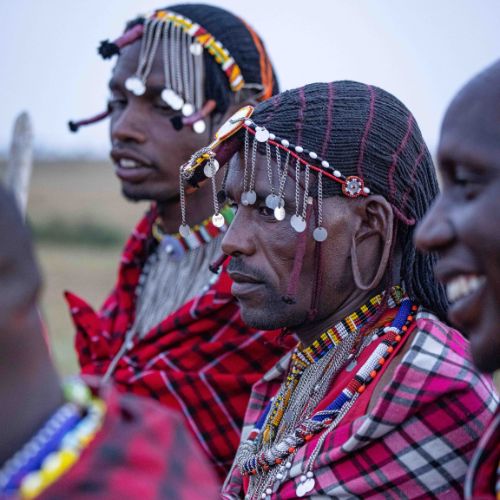
The Maasai people of East Africa, primarily found in Tanzania and Kenya, are known for their rich cultural heritage, strong warrior traditions, and deep connection to nature. Here are ten fascinating facts about the Maasai culture:
1. The Maasai Are Semi-Nomadic Pastoralists
The Maasai primarily rely on cattle for their livelihood. They move with their livestock in search of fresh grazing lands and water, making them semi-nomadic. Cattle are central to their economy and social status.
2. The Iconic Red Shúkà
Maasai men are often seen wearing a traditional red cloth called a shúkà, wrapped around their bodies. Red is considered a symbol of strength, courage, and protection from wild animals.
3. The Legendary Jumping Dance – Adumu
One of the most famous Maasai traditions is the adumu, or “jumping dance.” Young warriors (morans) gather in a circle and take turns jumping as high as possible, showcasing their strength and agility.
4. Cattle Are a Measure of Wealth
For the Maasai, wealth is measured in the number of cattle a person owns, not in money. Cattle provide milk, meat, and even serve as a form of currency for dowries and trade.
5. Unique Rite of Passage for Boys
Boys undergo a series of rituals to transition into manhood, including circumcision, which is performed without anesthesia as a test of bravery. Successfully enduring the ceremony earns them the title of “warrior.”
6. Women Play a Vital Role in the Community
Maasai women are responsible for building and maintaining homes, known as enkaji, made of mud, sticks, and cow dung. They also craft intricate beadwork used for adornment and cultural expression.
7. Distinctive Beadwork and Jewelry
Maasai beadwork is more than just decoration—it conveys messages about a person’s age, marital status, and social standing. Each color in the beadwork has a meaning; for example, blue represents the sky, and white symbolizes purity.
8. They Have Their Own Language – Maa
The Maasai speak Maa, a language belonging to the Nilotic family. However, many Maasai also speak Swahili and English, especially those living near towns and tourist areas.
9. Coexisting with Wildlife
Unlike many other communities, the Maasai have lived harmoniously with wildlife for centuries. Rather than hunting wild animals, they have traditional methods of protecting their livestock while respecting nature.
10. The Maasai Still Uphold Their Traditions
Despite modernization, many Maasai continue to preserve their traditional way of life. Some have integrated into modern society, while others maintain their customs, living in villages called bomas and practicing age-old traditions.
The Maasai culture is a symbol of resilience, tradition, and harmony with nature. Visiting a Maasai village during a safari in Tanzania or Kenya offers a deeper understanding of their way of life, values, and incredible history.